Sound familiar?Waterloo
- The call
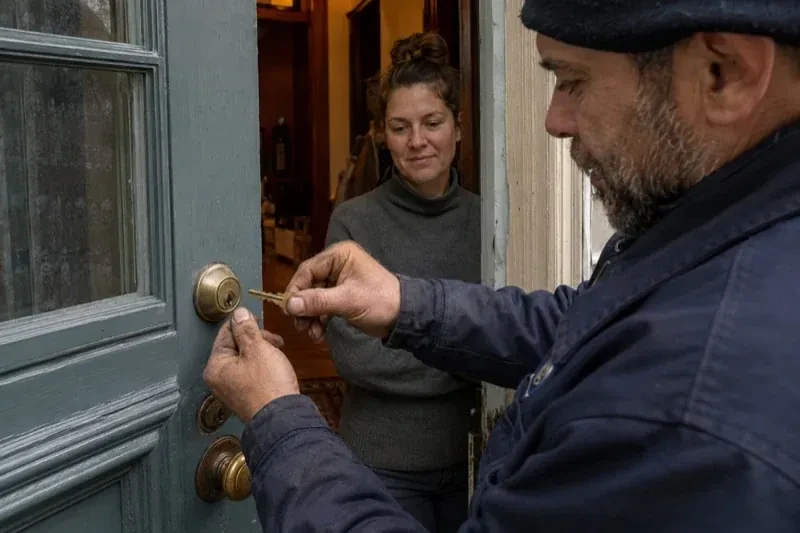
- Overnight the deadbolt froze, and this morning the key would only turn partway. One more push and it sheared off flush with the face of the cylinder. There is nothing left to grip, and the cold is not helping.
The key went in like any other morning, you turned it, and something gave with a small metallic click. The bow is still between your fingers.
A car key that breaks in the door or the ignition is handled with the same extraction tools, with one difference. On most vehicles the plastic head of the key carries the transponder chip and the remote buttons, and that half is usually intact in your hand. Once the blade is drawn out of the lock, a new blade can often be cut and fitted to the existing head, so the chip keeps talking to the car without reprogramming. The ignition wafers are checked for disturbance and the steering lock is confirmed free. Proof of ownership is asked for before work begins.
Sound familiar?Waterloo
Broken Key Extraction · Waterloo
Scene 1
Even a lock in good order can break a key that was already worn, bent or fatigued, so the cylinder is examined for a contributing cause all the same. The locksmith looks for grit and salt crust in the keyway, a cylinder cap that has loosened and let the plug shift, pins that have worn flat so the key needs force to lift them, springs that have weakened, and burrs at the mouth of the keyway that drag on the blade. On an exterior door the strike and hinges are checked as well, since a bolt that binds in its pocket makes the key carry the load. Each finding shapes the advice given once the fragment is out.
Scene 2
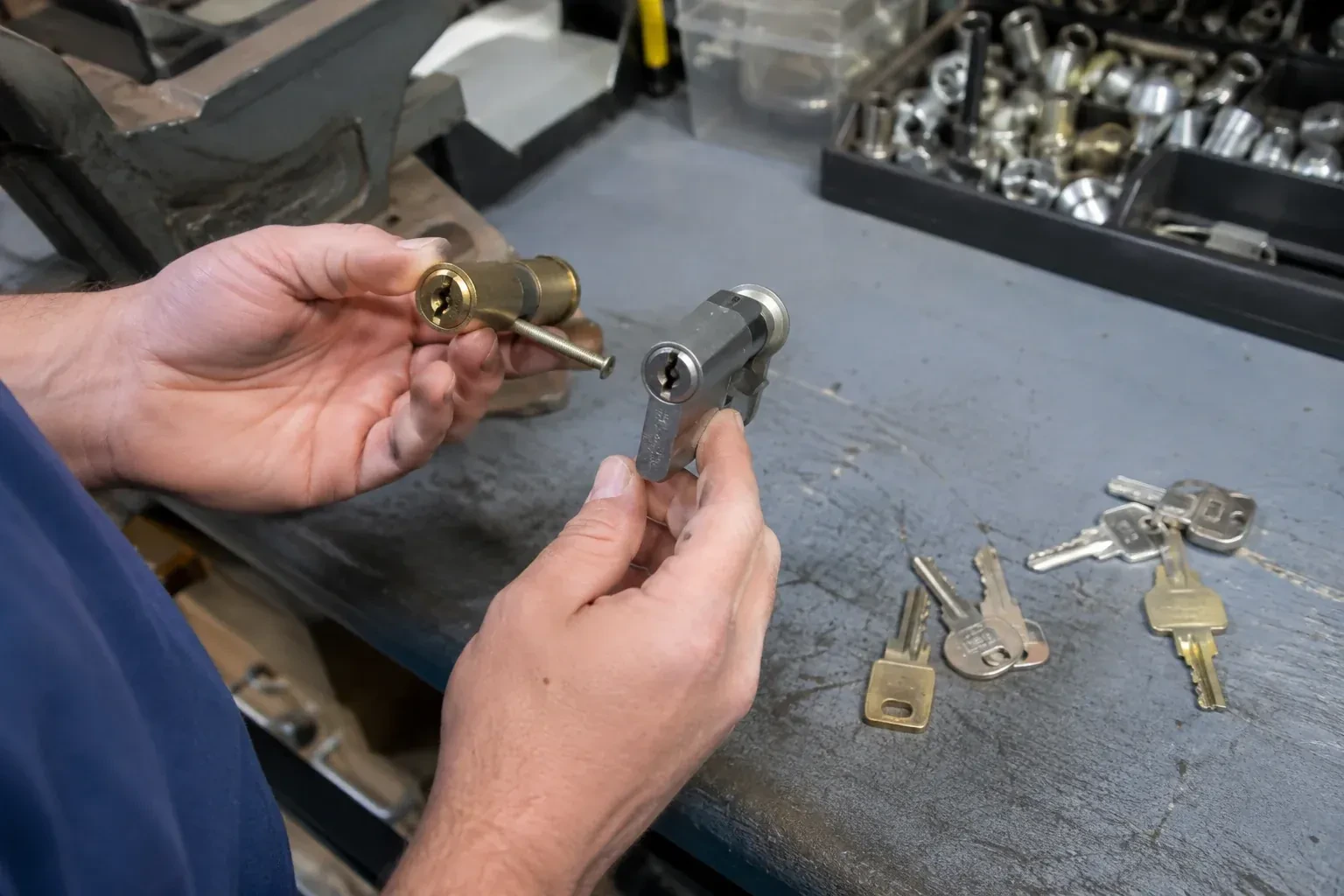
Occasionally a piece is too deep, glued in, or wedged past the pins where no extractor can reach. On a serviceable, removable cylinder, the lock is serviced from behind: removed from the door or padlock (a rekeyable padlock is normally unlocked first), its cap or retaining clip taken off, and a plug follower used to push the plug out while the top pins and springs stay in place. With the plug in hand the fragment is tapped out from the rear, the pins inspected, and everything cleaned before reassembly. Where the cylinder is non-rekeyable, damaged or will not free this way, a replacement cylinder is the alternative, explained first.
Scene 3
A winter break leaves you with a dried, lubricated cylinder and one rule: when the key stops partway, you stop too. Carry a small lock de-icer in a coat pocket or the glovebox; a few seconds of it, or the warmth of a cupped hand on the cylinder, frees a frozen plug without asking anything of the blade. Shut the storm door before freezing rain, and fit a keyhole cover on a side door that catches meltwater during a thaw. Ice is one of the winter causes the locksmith sees often, alongside worn keys, misalignment and dirty or worn cylinders, and it is one of the easiest to prevent.
What shapes the quoteWestmount Locksmith Co.
FeesSame any hour
In most cases yes, and it is tested in front of you with a key that fits. The inspection after extraction is where the honest answer lives: if the pins, springs and cap are sound and the keyway is clean, the cylinder goes back into service with a fresh key. If wear or damage caused the break, that is explained and a rekey or new cylinder is offered as a separate choice.
Often fatigue, though not the only cause. A brass blade is weakest where the deepest cut leaves the least metal, and thousands of turns can slowly work a crack into that spot. Then one morning something asks more of it: a frozen cylinder, a bolt binding in a swollen door, grit in the keyway, or turning before the key was fully in. A bent, worn or poorly cut key can also fail on its own, with no such trigger. The lock is inspected afterwards to find which applied.
Extractor tools grip the key, not the lock, and are meant to leave the pins, springs and plug as they were: hooks and spirals ride in the keyway grooves beside the fragment and draw it out the way the key travels. It is not certain, though; a deeply lodged fragment or a prior failure can still leave a lock, especially a vehicle cylinder, needing further work. Damage most often comes from what happens before the locksmith arrives, mainly tweezers, screwdrivers and glue, which is why leaving the keyway alone matters.
WaterlooOntario
Broken Key Extraction · Lakeshore Village, Westmount, Beechwood, Maple Hills, Rummelhardt
Every square is one home in a hundred.
On-site assessment
The key went in like any other morning, you turned it, and something gave with a small metallic click.
(226) 806-0434, open 24/7.
On-site assessment preferred · (226) 806-0434, open 24/7