Skip to content
WestmountLocksmith Co.Open 24/7 (226) 806-0434
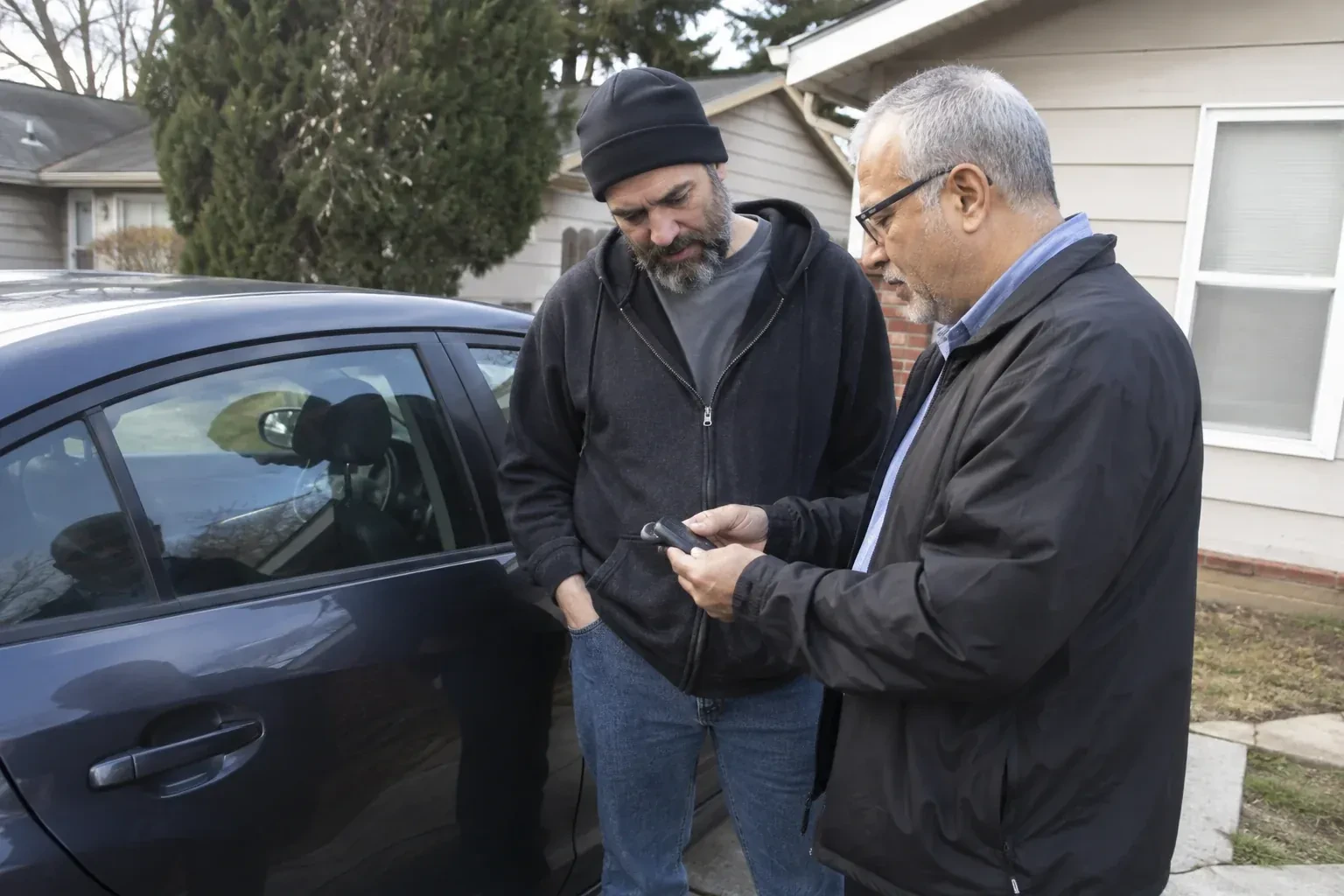
Two adults discussing a key fob beside a parked car. — Car Lockout Service, Waterloo

Car keys · Waterloo

Car Lockout Service

The rental van came with one key. It went into the door lock, turned partway, and snapped, leaving half the blade in the cylinder and the other half in your hand.

In plain words

Most car lockouts end with nothing to show that anyone was ever there. Purpose-made tools do the work a key or a finger would do from inside: an inflatable wedge opens a small gap at the top of the door frame, a padded reach tool presses the unlock button or lifts the handle, and door-edge guards keep paint and seals clean. Where a door cylinder exists, a pick-and-decoder made for that keyway turns it without marks. Coat hangers, screwdrivers and forced windows have no place in the process, and breaking glass is reserved for genuine emergencies where a life is at stake and responders are already on the way.

Sound familiar?Waterloo

The call
It is a January morning, minus twenty with the wind, and the key will not enter the door cylinder. Yesterday's slush ran into the keyhole and froze overnight. The door itself is glued to its rubber seal, and the fob has gone quiet in the cold.
NextHow the visit goes

Car Lockout Service · Waterloo

How the visit goes

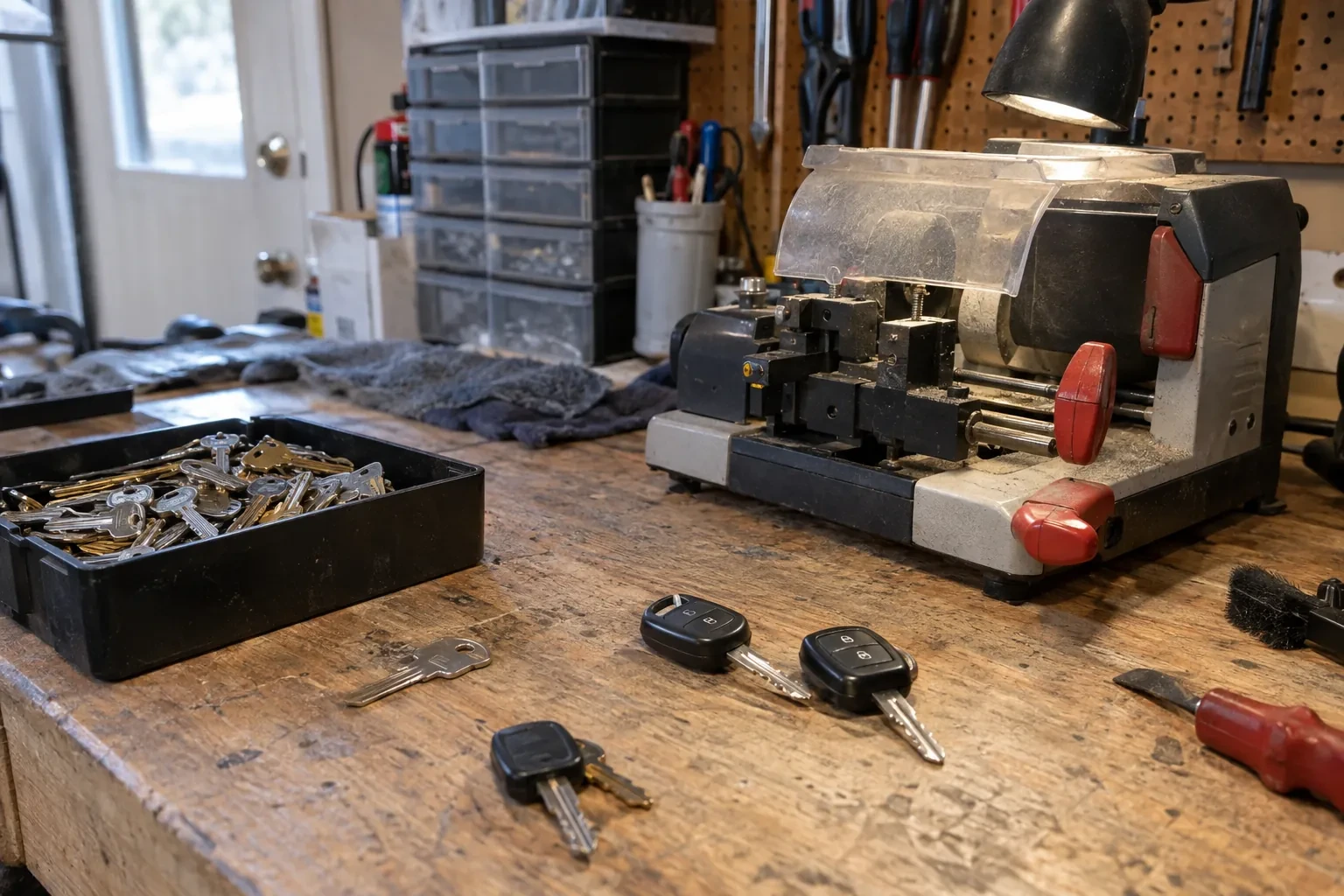
Key-cutting machine with red handles on a worn wooden bench beside a tray of loose keys, key fobs and a screwdriver.
  1. Scene 1

    Anyone or anything inside

    The first question on the phone is whether a person or an animal is locked in. A child in a car seat, an elderly passenger, a dog in the back: any of these in summer heat or winter cold turns a lockout into an emergency, and the caller is asked to phone 911 while the locksmith is on the way. The province's animal protection line and police can act on animals in distress, and responders are equipped to enter a vehicle at once. Where nobody is inside but medication, a running engine or a phone with an urgent call are, the pace of the opening is set accordingly.

  2. Scene 2

    Making a key when the keys are gone

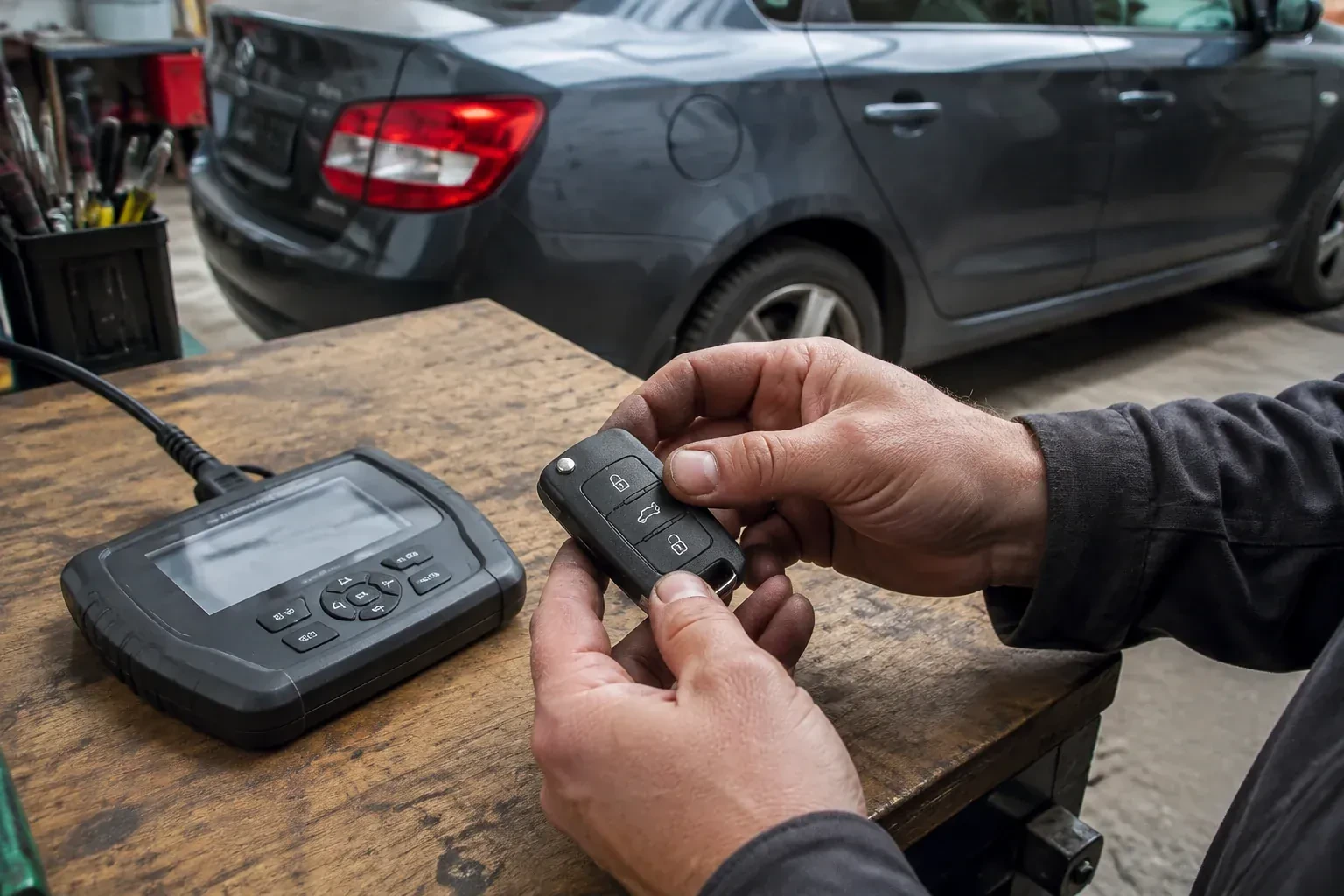
    Lost keys turn the visit into two stages. First the car is opened without damage. Then the locksmith produces a working key: the door cylinder is decoded to read the mechanical cuts, or the key code is drawn from the vehicle's records against your proof of ownership, and a blade is cut on the machine in the van. A transponder key or fob is then programmed where the vehicle's own security system supports it, sometimes needing manufacturer credentials or a different procedure, and where the vehicle allows, the lost keys are erased so they no longer start the car. You leave with a key that unlocks, starts and locks, tested at the roadside.

  3. Scene 3

    Keys in hand and a plan for the spare

    Once the keys are back in your pocket, a minute on spares is well spent. A second key kept at home, with a family member or in a small lockbox at the house turns the next lockout into a phone call to someone you know. For a keyless car, the spare fob should be stored away from the car and away from the main fob, so a lost bag does not take both. If the vehicle came to you with a single key, the locksmith can cut and program a duplicate while the tools are out, and can show you how the mechanical blade hides inside the fob for the day the battery quits.

In the van

  • Twelve-volt jump pack
  • Broken key extractors
  • Key programmer
  • Key cutting machine
  • Lock de-icer

What shapes the quoteWestmount Locksmith Co.

Commercial, rental or fleet vehicle
Vans with separate cargo locks, rentals that need a written account for the return desk, and fleet vehicles with key records all add small steps that the quote names plainly.
Programming through the diagnostic port
Pairing a new key or fob to the immobiliser is skilled work with specialised equipment, and some models need security access from the manufacturer. That step is quoted separately from cutting the blade.
Aftermarket alarm or immobiliser
A car with an added alarm or a second immobiliser may need its own reset or bypass procedure once the door is open, and that extra step is priced as its own line.

FeesSame any hour

Have it ready

Before you call · 0 / 3

(226) 806-0434

Good questions about locks

The whole car is dead, not just the fob. Can you still open it?

Yes. When the interior lights, horn and remote are all silent, the car's own twelve-volt battery has run flat, and the fob has nothing to talk to. The door is opened through the mechanical cylinder or with a wedge and reach tool; loose or corroded connections and other faults can look the same as a dead battery, so it is checked and confirmed safe before a jump pack brings the car back to life. If the battery will not hold a charge, you will know before the locksmith leaves.

I have lost my only key. Can a locksmith make a new one at the roadside?

For most cars, yes. After the car is opened, the door cylinder is decoded to read the cuts, or the key code is drawn from the vehicle records against your proof of ownership, and a blade is cut in the van. A transponder key or fob is then programmed through the diagnostic port so the engine will start. Some newer or high-security models need dealer-only parts; you are told that up front rather than after.

My car has push-button start. Does that change anything?

It changes what happens after the door is open. Entry is the same as any other car. Starting depends on the immobiliser recognising a fob, so if your fob's battery is dead you hold it against the start button or in a marked pocket in the console, which the locksmith shows you. If the fob itself is lost, a new one is programmed where the vehicle's own security system supports it, though some models need dealer credentials, tools or parts first.

Waterlooinformation

WaterlooOntario

Town
Waterloo
In business
33 years
Hours
Open 24/7
Nights, weekends and holidays, same fees
Visits
On-site assessment preferred. Request a visit or call.

2021 census: what it means at the door

Every square is one home in a hundred.

  • 33 in 100 homes · newer homes
  • About 33% of homes in Waterloo were built in 1980 or earlier, according to the 2021 Census.During construction many people hold a key: framers, finishers, painters, the sales office. Where homes are new, rekeying the exterior doors to a fresh key is the tidy way to close that chapter, and it takes a single visit.
  • Single-detached houses make up about 49% of homes in Waterloo (2021 Census).Neighbourhoods of houses beside townhouses and low-rise buildings have a range of door constructions: solid wood, steel, fibreglass and metal-clad. A locksmith who works in such an area is used to fitting hardware to all of them without new holes.

Source: Statistics Canada, Census Profile

Open Waterloo in Google Maps

On-site assessment

Request a visit.

The rental van came with one key.

(226) 806-0434, open 24/7.