Skip to content
WestmountLocksmith Co.Open 24/7 (226) 806-0434
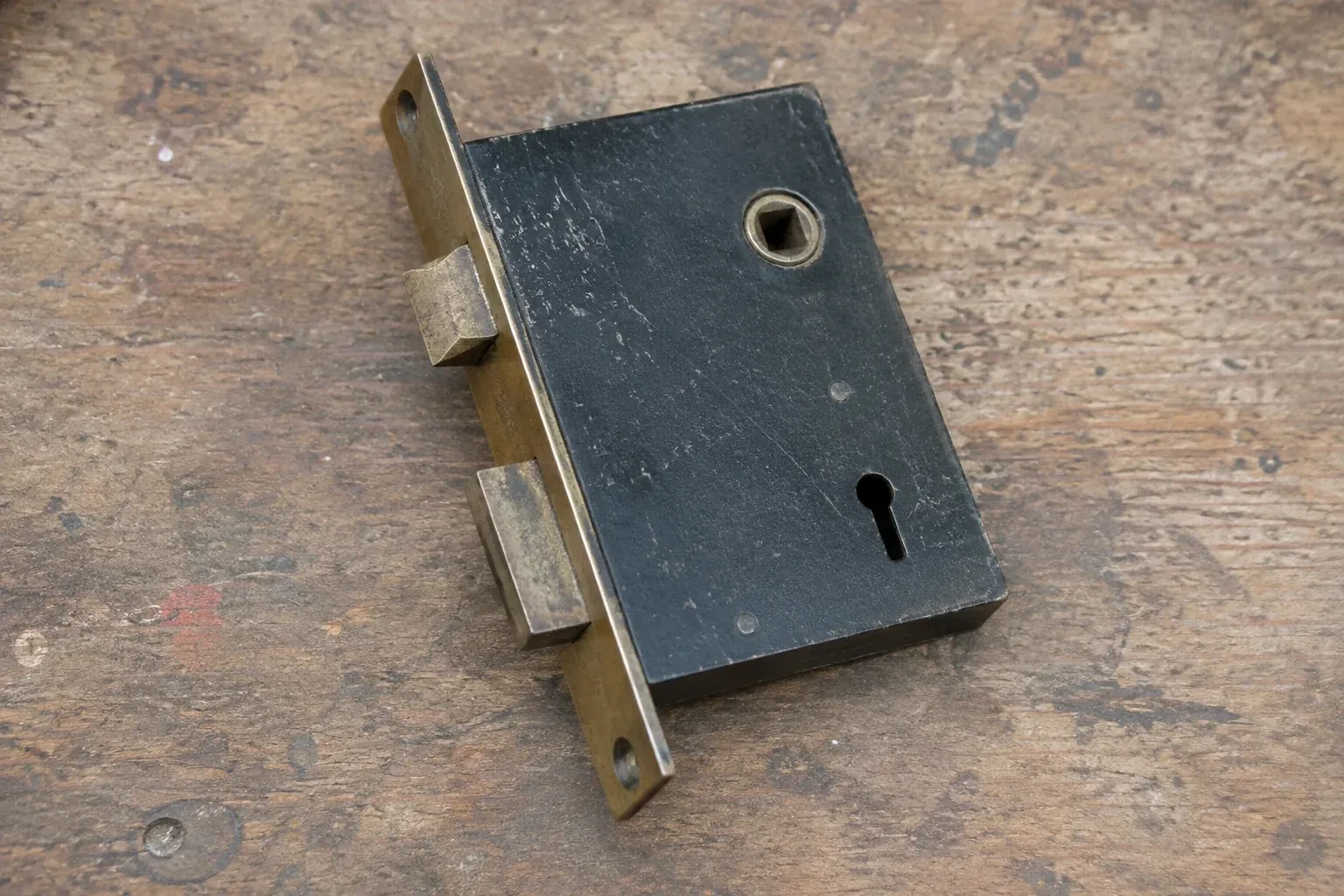
Closed mortise lock case with spindle opening, keyhole, latch and deadbolt on a wooden workbench. — Vintage Mortise Lock Service, Waterloo

Change or rekey · Waterloo

Vintage Mortise Lock Service

The interior bedroom doors on the second floor have the original mortise latches, and none of them close any more. The doors drift open, the small brass turn buttons do nothing, and the keyholes have been empty for as long as anyone can remember.

In plain words

Interior doors are as much a part of this work as the entry. Bedroom, bathroom and closet doors in an older home usually carry a lighter mortise latch with a privacy turn button, and after decades without lubrication they stop catching or the turn button seizes. These small cases are short jobs on the bench: a clean, a spring, a new turn button spindle where the old one has sheared. Sets of interior locks are often serviced in one visit, and a bit key can be cut that operates all of them, which is how they were originally supplied when the house was built.

Sound familiar?Waterloo

The call
The old skeleton key still fits the keyhole, but it now needs a jiggle, a lean on the door and a little luck before the bolt moves. Last week it took three tries. You have one key and no idea where a second could come from.
NextHow the visit goes

Vintage Mortise Lock Service · Waterloo

How the visit goes

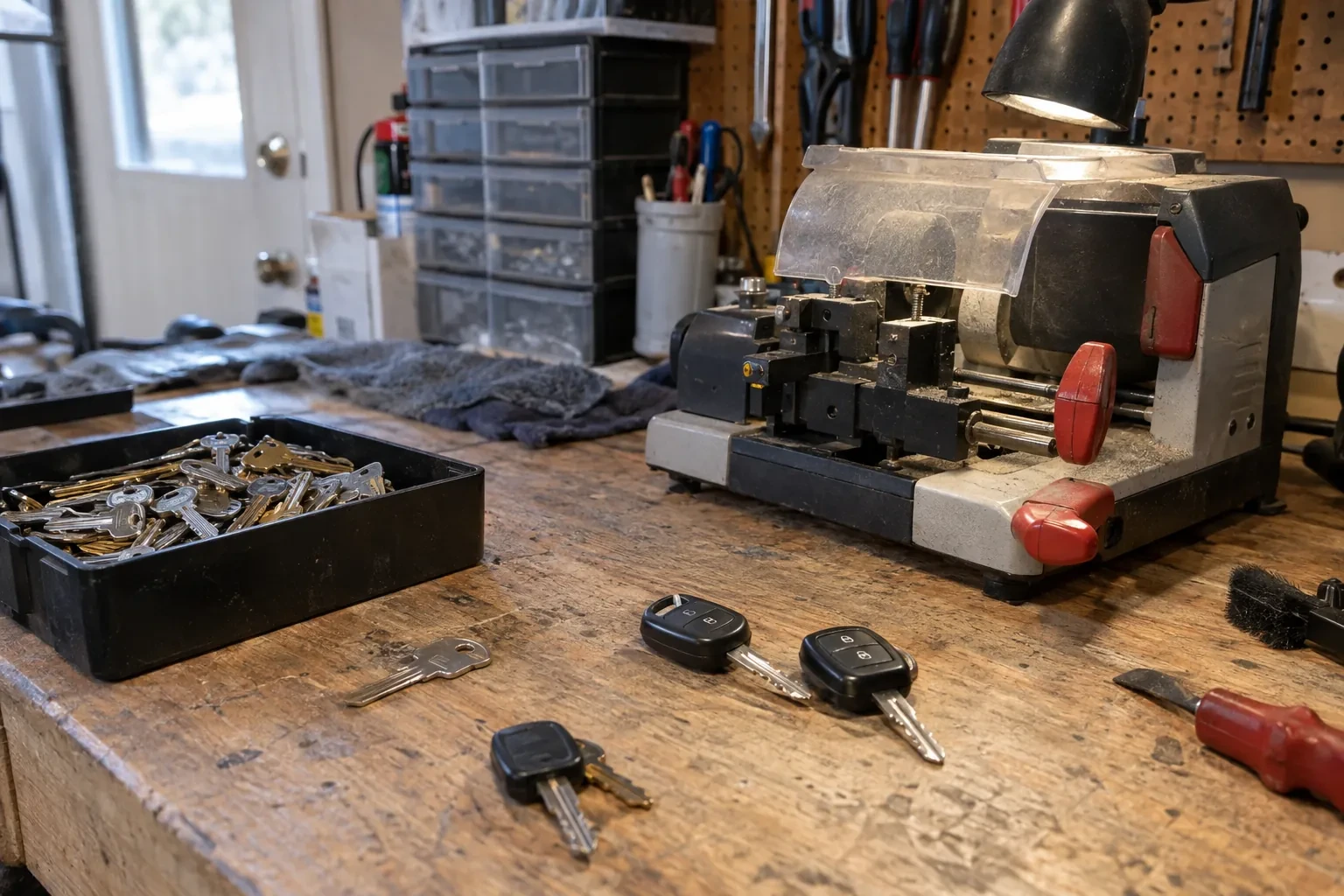
Key-cutting machine with red handles on a worn wooden bench beside a tray of loose keys, key fobs and a screwdriver.
  1. Scene 1

    Reading the faceplate

    Standing at the open door, the locksmith looks at the narrow brass or steel plate in the door edge. Its height, the spacing of its screws, any maker's stamp, and whether it shows one bolt or two tell a good deal about what is inside: a latch-only case for an interior door, a latch and deadbolt case for an entry, or a privacy function with a turn button. The distance from the door edge to the centre of the knob, the backset, is measured, along with the spindle size. These figures decide which springs, followers and, if it comes to that, which replacement case will fit, so they are written down before the lock is disturbed.

  2. Scene 2

    Taking the lock out without marking the door

    Removal is done in a set order so nothing is forced. The knob set screws are backed off and the knobs and spindle drawn out, then the escutcheons are lifted away, their screw positions photographed for reassembly. On a cylinder lock, the small set screw in the faceplate is released and the cylinder is unthreaded from the case. The faceplate screws come out, and the case is eased from its pocket with a gentle rock, never a pry bar, because the wood at the edge of an old door is thin. Everything that comes off is bagged and labelled, and the pocket is looked at while it is empty.

  3. Scene 3

    A clear way out

    If the entry door's deadbolt was keyed from both sides, the service leaves the inside operable without a key: a thumb-turn fitted to the bolt tail, or a knob function that releases the latch from inside. This is simply good sense for a door people use to leave the home, so nobody is stuck hunting for a key inside their own house. You are shown how the inside release works and asked to try it, and everyone in the household should know it too, especially anyone who grew up with the old habit of leaving the key in the door on the inside.

In the van

  • Mortise cylinder and cam
  • Deadbolt lever springs
  • Spindle and knob set screws
  • Light lock oil
  • Reproduction mortise case

What shapes the quoteWestmount Locksmith Co.

Travel and access
Distance to the property and how easy it is to work at the door, on a busy entry or a third-floor walk-up, are part of any call-out and are stated when the visit is booked.
Making the inside key-free
Fitting a thumb-turn or interior release to a deadbolt that was keyed on both sides is its own small item, and one most owners of an entry door choose to include.
Strike and hinge work
Where the door has dropped or swelled, adjusting or moving the strike and tightening or packing hinges is part of the fix. It is small work but it is listed, so you see what was done to the door.

FeesSame any hour

Have it ready

Before you call · 0 / 3

(226) 806-0434

Good questions about locks

How long does servicing a mortise lock take?

A single entry lock that needs cleaning, springs and a strike adjustment is generally done in one visit of an hour or two. Filing a bit key adds bench time, and a set of interior latches is longer simply because there are more of them. A case that needs a part fabricated, or a replacement case that has to be ordered to size, may mean a second visit; the locksmith says so at the assessment.

Why does my knob turn without moving the latch?

Most often the square hole in the hub inside the case has rounded with age, or the spindle has worn, so the knob turns a good way before it grips. Loose knob set screws produce the same slack. Less often a latch spring has broken and the latch is simply sitting inside the door. All of these are corrected during service by replacing the spindle and screws, bushing or replacing the hub, or fitting a new spring.

Which parts usually need replacing?

Springs, first and foremost: the latch spring, the hub spring that returns the knob, and the small springs on the deadbolt levers. After that, the spindle and knob set screws, a hub whose square has worn round, a worn deadbolt lever or follower, and on later locks the cylinder set screw or the cylinder itself. Bolts, cases and trim are almost always kept, cleaned and refitted rather than replaced.

Waterlooinformation

WaterlooOntario

Vintage Mortise Lock Service · Lakeshore Village, Westmount, Beechwood, Maple Hills, Rummelhardt

Town
Waterloo
In business
33 years
Hours
Open 24/7
Nights, weekends and holidays, same fees
Visits
On-site assessment preferred. Request a visit or call.

2021 census: what it means at the door

Every square is one home in a hundred.

  • 33 in 100 homes · newer homes
  • About 33% of homes in Waterloo were built in 1980 or earlier, according to the 2021 Census.During construction many people hold a key: framers, finishers, painters, the sales office. Where homes are new, rekeying the exterior doors to a fresh key is the tidy way to close that chapter, and it takes a single visit.
  • Single-detached houses make up about 49% of homes in Waterloo (2021 Census).Neighbourhoods of houses beside townhouses and low-rise buildings have a range of door constructions: solid wood, steel, fibreglass and metal-clad. A locksmith who works in such an area is used to fitting hardware to all of them without new holes.

Source: Statistics Canada, Census Profile

Open Waterloo in Google Maps

On-site assessment

Request a visit.

The interior bedroom doors on the second floor have the original mortise latches, and none of them close any more.

(226) 806-0434, open 24/7.