Westmount Locksmith Co.Bulletin 2 of 3Waterloo, Ontario
Vehicle Lock Repair: inside the visit
Which lock is affected shapes the whole visit.
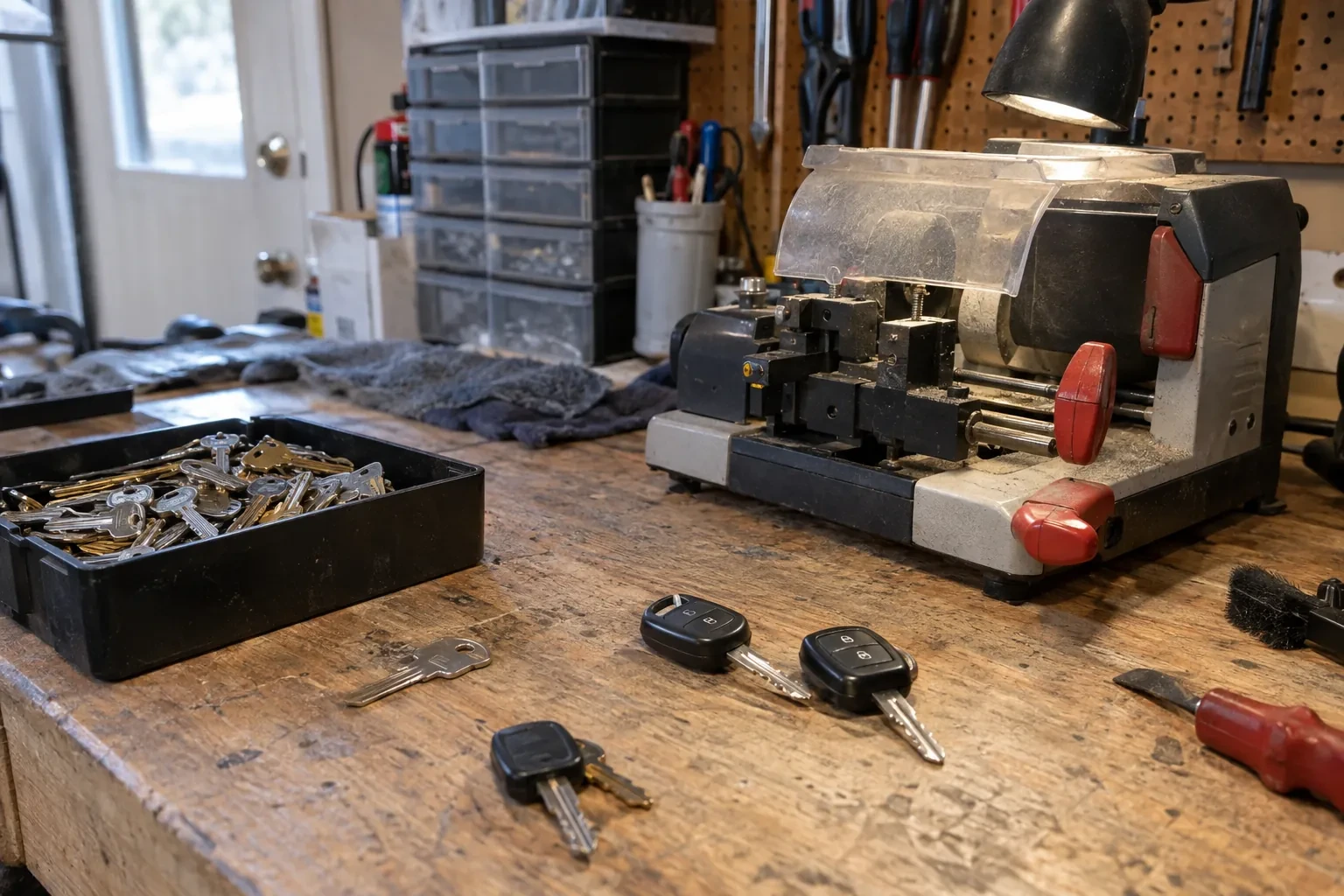
Which lock is affected shapes the whole visit. A door that will not respond to the key usually points to the cylinder or the linkage rod behind it, a trunk or hatch that spins without opening points to a worn or disconnected cam, and a door that ignores the remote but still answers the key points to the power actuator rather than the lock itself. Reading the symptom correctly narrows where to look before the panel comes off, and checks of lock position, fit, cable routing, connectors and the harness follow before the repair settles on the part that failed, rather than replacing hardware that was never the issue.
Which lock, and how it is behaving
The next question narrows things down: is it a door, the trunk or hatch, or a storage compartment, and does the key turn without effect, resist turning altogether, or simply refuse the remote while still answering by hand? Each answer points toward a different part. A key that spins without engaging the latch suggests a linkage problem behind the cylinder, while a lock that ignores only the remote suggests the actuator or its wiring rather than the mechanical side.
Tracing and repairing a wiring fault
Where the fault sits in the wiring rather than the actuator, the locksmith follows the circuit back from the lock to the door hinge, checking the flexible wiring boot that carries the wires between the body and the door for cracks or fraying. A damaged section is repaired or the boot replaced, and the connector is checked for corrosion, since this small rubber conduit takes the brunt of every door open and close over the years.
A door and lock ready for winter
Once a cylinder has been freed or replaced, a dry lubricant helps it shrug off the meltwater and road salt that a winter climate puts into an exposed keyway. Clearing snow and ice from the door sill before forcing a key, and giving the weatherstripping a wipe as the season turns, both reduce the chance of the same lock freezing solid on the next cold morning.