Sound familiar?Lakeshore Village
- The call
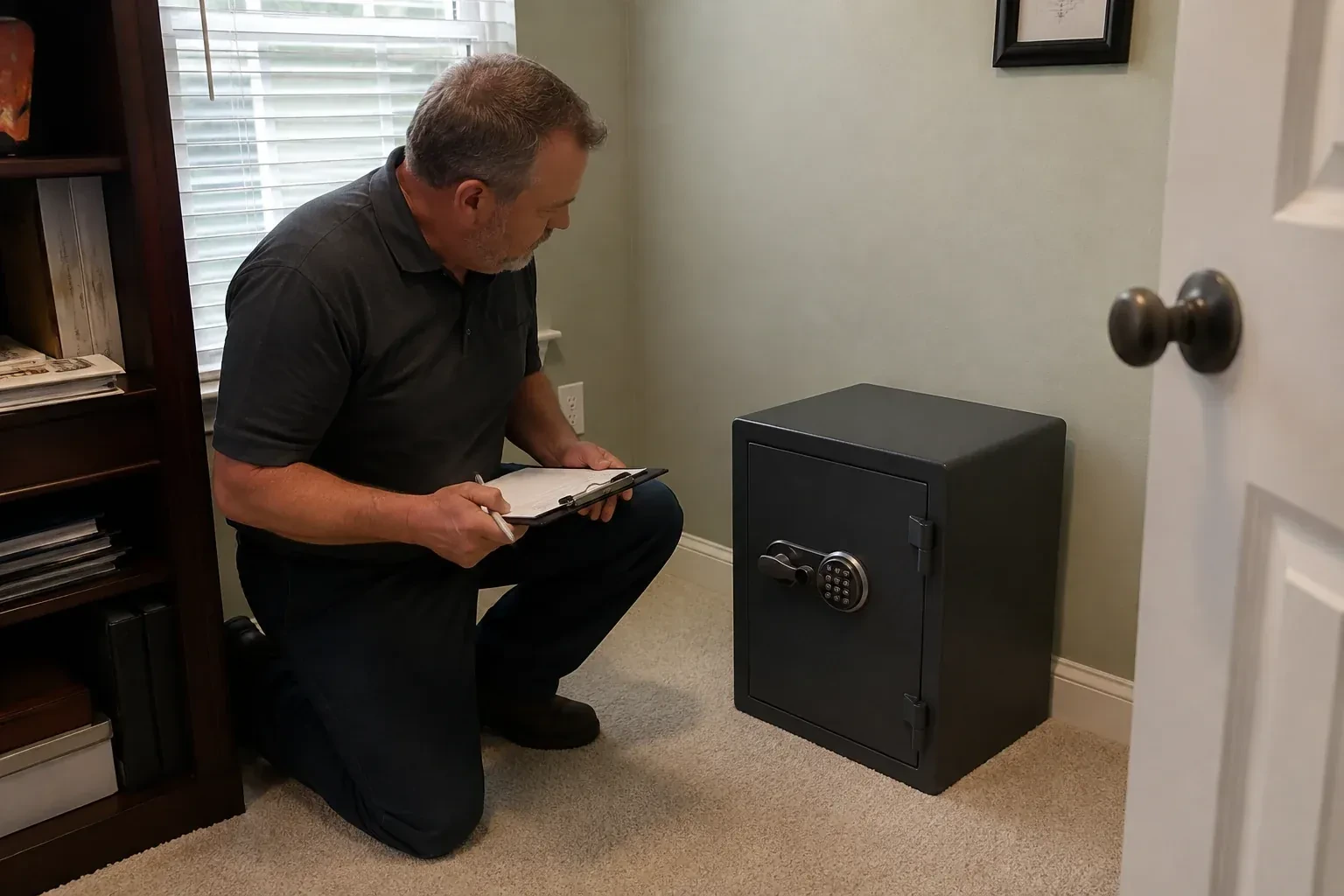
- The bookkeeper who set the office safe's code retired in a hurry, and the float cash for tomorrow's registers is sitting behind a keypad nobody else in the building can operate.
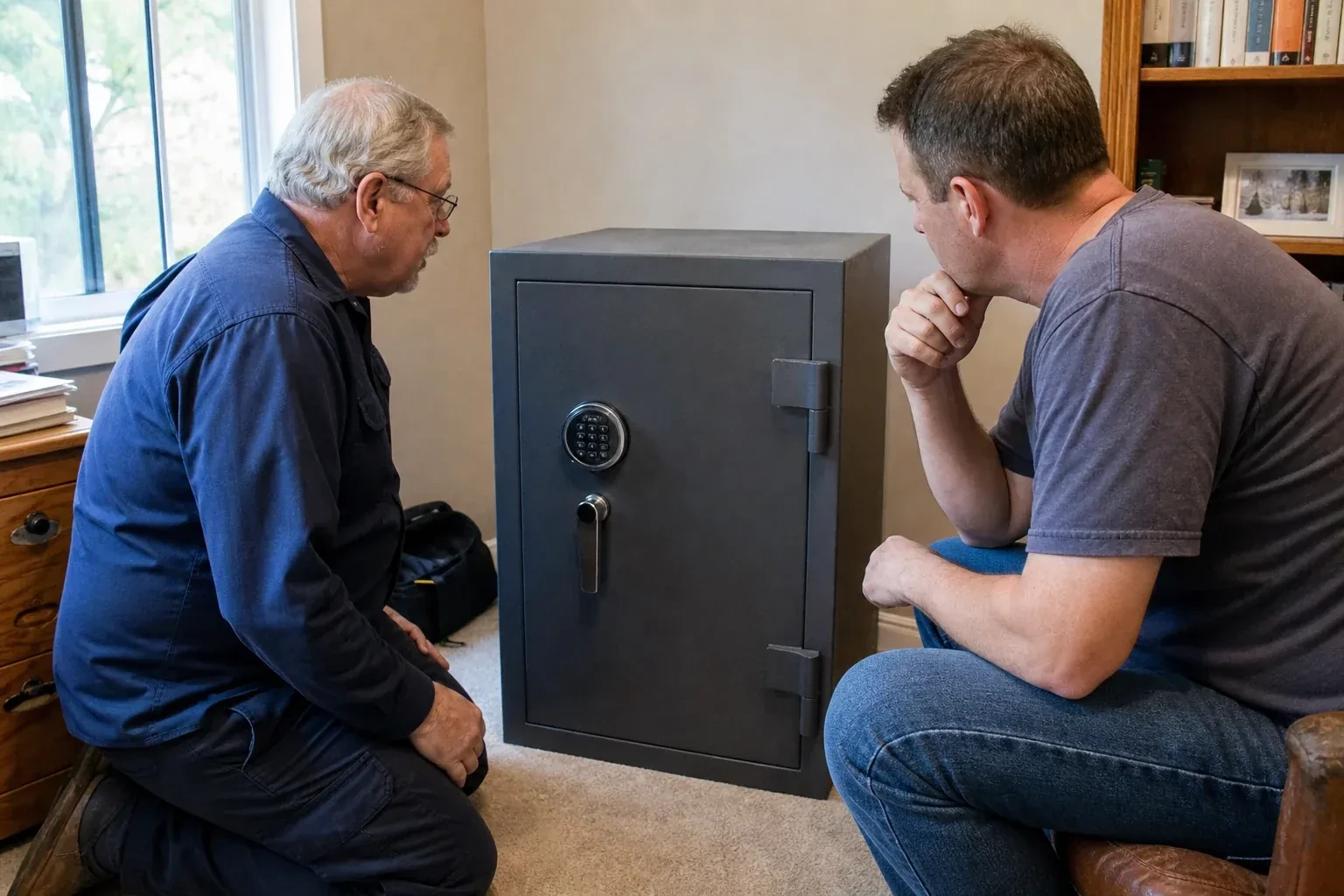
A safe sat in a late parent's basement for years, its combination known to nobody left in the family, and everyone would like to know what is actually inside it.
Safe opening favours the gentlest method that fits the particular safe and lock, with drilling kept as a later option rather than a first resort. Manipulation and decoding are tried first for a mechanical dial, and a manufacturer reset or override path where one exists for an electronic keypad. Where those routes are unavailable or exhausted, drilling enters the conversation, aimed at a point the maker's own service literature marks as reachable and repairable. Most safes that still have their original lock in reasonable condition never reach that last rung at all.
Sound familiar?Lakeshore Village
Safe Opening & Combination Change · Lakeshore Village
Scene 1
A safe's data plate, when it survives, often carries more than a model number: many list a UL security classification for the lock itself, information that tells the locksmith what level of manipulation resistance to expect and what tools the job calls for. Any paperwork the owner still has, a purchase receipt, a service record from a previous visit, or a manual tucked in a drawer, adds detail that speeds up identification. Where none of that survives, the locksmith builds the same picture by reading the hardware directly, just with a few extra minutes spent confirming what the plate would otherwise have said.
Scene 2
Opening a safe is planned around the specific lock, its condition and what recovery options it actually has: manipulation or decoding for a mechanical dial, a manufacturer reset or override path for an electronic keypad where one exists, and drilling where the gentler routes are unavailable or exhausted. This order exists because a safe's lock, dial ring and case finish are the hardest parts to replace cleanly, so any method that leaves them intact is worth the extra time it takes. Working through the ladder in order, rather than jumping to the most direct option, is what keeps the great majority of safes leaving the visit with their original lock still in place.
Scene 3
A mechanical dial benefits from being turned through a full combination cycle occasionally even when the safe is not otherwise in use, since a dial left untouched for years is more likely to develop the stiffness that led to this visit. An electronic keypad benefits from a battery change on a set schedule rather than waiting for a low-battery warning to appear, since a dead battery at an inconvenient moment is the more common failure than the lock itself. Wiping the keypad and dial face of dust occasionally, without any liquid cleaner, keeps both types responding the way they should.
What shapes the quoteWestmount Locksmith Co.
FeesSame any hour
In most cases the lock and case are left intact, since manipulation, decoding and manufacturer reset paths all work the mechanism the way the original combination would. Drilling is kept for cases where the gentler routes are unavailable or exhausted, aimed at one small point the manufacturer marks as repairable, and patched before the visit ends; a skilled technician aims to leave the rest of the body, hinges and finish unaffected, though the outcome and any effect on the safe's rated protection level depends on its construction.
Yes. The locksmith identifies the safe directly from its hardware, brand plate if one survives, and physical layout, then proceeds with the same manipulation, decoding or reset options used on any safe with an unknown history. Documentation such as a will, an executor's letter or a property transfer establishes your authority to have it opened.
It helps but is not required. A data plate on the door or frame, a purchase receipt, or a manual kept in a drawer all speed up identifying the lock family in advance. Where none of that survives, the locksmith identifies the safe from its case shape, dial style and handle once on site, which simply adds a short assessment step at the start of the visit.
WaterlooOntario
Safe Opening & Combination Change · Waterloo, Westmount, Beechwood, Maple Hills, Rummelhardt
Every square is one home in a hundred.
On-site assessment
A safe sat in a late parent's basement for years, its combination known to nobody left in the family, and everyone would like to know what is actually inside it.
(226) 806-0434, open 24/7.
On-site assessment preferred · (226) 806-0434, open 24/7